








Are there any Summer camps that do disability inclusion right?
I recently landed upon a website of a camp called Ramah that I think is actually doing inclusion right. Based on the six-minute description offered by the director of their special needs programs, it has been a process from segregation to integration based on parent request. In short, this is a Summer camp that actually listened to parents in their community!
The camp describes a four track orientation, with segregated cabins for some campers and vocational training during camp; however, they also offer an integrated cabin experience where they train staff prior to camp, and add an extra counsellor so that there is sufficient staff to ensure that the child with special needs is properly supported.
What impressed me most is that some of these campers with special needs actually went on to be hired by camp and became staff members themselves. That’s truly putting your money where your mouth is! Let’s hope that other camps emulate this model and truly integrate children with special needs into their communities.
Do Kids With Autism Eventually Learn to Speak?
Here’s my review of Predictors of Phrase and Fluent Speech in Children with Autism and Severe Language Delay, a study based on the Simon Simplex Collection (SSC), which is a large multisite data base project collecting a variety of information on families who are in some way affected by autism.
Wodka, Mathy and Kalb set out to ask two questions:
- What is the rate of language acquisition of children with autism who, by age 4, had not put words together in phrases? and ...
- What factors did predict when these children would learn to speak in phrases?
Using a very large sample of 372 children with Autism Spectrum Disorder (ASD), these researchers found that higher IQ and less social impairment were good predictors of eventual ability to speak in phrases. They report that 70% of the children in the database eventually learned to speak in phrases by eight years of age, and that 50% of the entire sample eventually became fluent speakers.
For the moment, let’s put aside the few methodological problems with the study (e.g., over-reliance on retrospective parental reporting by using a parent interview [ADI-R] and a parent checklist [Child Behavior Checklist]) and take what these researcher claim as accurate. Every parent is still waiting for the answer to the burning question:
Which treatment programs created such great outcomes? What makes kids with autism talk?
Regrettably, here’s where the study falls short. Although the researchers tip their hat to Behavioral Treatment when they mentioned a prior study by Pickett and colleagues that found participation in Behavioral Intervention programs and IQs over 50 were predictors of developing speech after 5 years of age, these researchers did not actually measure the effect of behavioral treatment programs on the acquisition of speaking in phrases. This omission is unfortunate because the reader is left with the impression that as long as the child has an average non-verbal IQ, and evidence of social interest, the child is likely to spontaneously speak in phrases without intervention. This is an erroneous conclusion because the study did not measure whether the children were in treatment or not. In other words, kids don’t magically attain speech when afflicted with the debilitating disorder of autism - there is usually a lot of heavy lifting involved, in the form of lengthy, intensive and expensive behavioral treatment.
Going forward, I would like to see the researchers control for treatment when studying our children. The study is only valuable if we know which treatments create the outcome of 50% of the entire sample eventually becoming fluent speakers!
One heartening finding in the Wotka et al. study is that there was no relationship found between “stereotyped behavior/repetitive interests” and language acquisition. The take-away message here is that we shouldn’t look at children who are hard to reach because self-stimulatory behavior is blocking the world out as somehow being less able to acquire language.
Children with autism most certainly can acquire language, as long as they have access to quality treatment for the disorder.
What Keeps You Up At Night?
I had the privilege of sitting on the panel for the Association for Behavior Analysis International (ABAI) conference in Oregon in January. The last day of the conference was devoted to parents. Parents on the panel were asked to address an important topic.
Question: What Keeps You Up At Night?
Since I’ve been thinking about this rich topic for a long time, I thought I’d share the thoughts I presented at the ABAI conference, in their entirety. The presentation is posted below.
____________________________
What keeps me up at night? That’s a very rich topic, and you’re looking at an insomniac! If I could sum up in a phrase, it would have to this: JUNK SCIENCE.
Why should parents care about junk science?
The concern is that Junk Science will win the autism treatment war and successfully block effective treatment for children with autism. This would have ramifications for children not yet diagnosed, just diagnosed, or already in effective treatment programs.
In other words, Intensive Behavioral Treatment based on the principles of Applied Behavior Analysis, is going to be replaced by ineffective programs that will be served up by the 1000’s of treatment purveyors who are masquerading as legitimate, effective treatment professionals.
Why do I see things in such a negative light? Here are some very dangerous trends:
Junk Science is becoming more sophisticated
When my child was diagnosed over twenty years ago, there was no shortage of quackery. But when a parent asked for scientific studies, if the quacks were organized, they’d supply newspaper articles or testimonials, but no studies in peer-reviewed journals. Twenty years later, treatment quackery is published in poor-quality journals, some of which are written by academicians. In addition, there are now books full of uncontrolled case studies, which are no better than testimonials but come with a patina of legitimacy.
Convergence
The second trend I see is what I’ll refer to as convergence. In this case, a number of treatments that have never had any scientific support are combined and offered in an eclectic program. This often masks the fact that there is no data that demonstrates treatment efficacy, and thereby fools parents of newly diagnosed children into evaluating the treatment program as worthwhile.
An even more problematic issue are the treatments with no decent data outcomes that sprinkle a little behavioral treatment into their program and then compare their program to what is available in the community, which is generally general special education, which is not typically optimal for children with autism. So now substandard treatment competes with glorified babysitting. In this false contest of autism treatment, the treatment with a modicum of ABA that is being tested will outcompete the control.
Although it may be politically incorrect to say, this is the big problem with the Early Start Denver Model. In 1987 – 1998, the Denver Model (originally cased the “playschool”) did not present itself as a behavioral treatment program for autism. Back then, the “Playschool” was primarily play therapy. The Early Start Denver Model now incorporates ABA. They published a 2010 study where they took:
“Forty-eight children diagnosed with ASD between 18 and 30 months of age were randomly assigned to 1 of 2 groups: (1) ESDM intervention, which is based on developmental and applied behavioral analytic principles and delivered by trained therapists and parents for 2 years; or (2) referral to community providers for intervention commonly available in the community.”
Now these researchers created results showing how great their model is as compared to glorified babysitting. Why should we care? We should care for two reasons:
First, this wastes our children’s valuable time with treatments that are diluted at best and we know that diluted treatment doesn’t create best outcomes. Over twenty-five years ago, Lovaas (1987) demonstrated sub-optimal outcomes when he provided highly quality behavioral treatment to a control group for 10 hours a week.
Based on their research, the Early Start Denver interventionists seem to be overly concerned with saving money on the backs of our kids. They seem to be interested in a) less intensity that costs less, b) parents as therapists aka free labor, and c) long distance training of therapists which costs less. The unifying theme appears to be “let’s save money”, not “what works best” for the kids.
Of course, I have no issue with providing quality treatment more efficiently; however, before trying to save money, researchers in other fields first attempt to create the best treatment for the malady they are targeting. To illustrate, cancer researchers aren’t thinking about saving money when they develop innovative treatments for cancer. Why are children afflicted with autism somehow deemed to be children of a lesser god, where economizing on treatment is more important than effectiveness?
Academic literature reviews
The 3rd trend that keeps me awake at night are the growing number of so-called academic literature reviews on autism treatments. Governments rely on these reviews to make decisions about whether to fund intensive behavioral treatment. Many of these so-called “independent” reviews are generally created by health care economists whose job is, essentially, to save gov’ts money by only funding what they, in their gate keeper capacity, deem to be science-based treatments. That sounds great until you understand that this group of health policy analysts is either:
In the back pocket of gov’ts with government owned medicine such as Canada, the U.K., or Denmark, or
Honest in their mission but do not understand the politics of the autism wars and are influenced by their international colleagues who may have a darker agenda, like the British Columbia Office of Health Technology’s shameful work against kids with autism in Canada’s landmark Auton case for publicly funded autism treatment.
Due to the highly politicized nature of this area, the consumer should not put any trust in any literature reviews on autism treatment. Before believing any recommendations, the informed consumer should go directly to the source article. Unfortunately, most people trust these health care economists who are in the business of rationing treatment. It’s analogous to having the fox guarding the chicken coop.
In the U.S., parents have been wildly successful at lobbying and litigating against health insurance companies. The autism lobby has also been very successful in getting autism mandates passed in the majority of states that require autism treatment to be covered by the insurance companies in that state. However, these academic literature reviews are dangerous because they are calling intensive behavioral treatment “experimental” which is the “get out of paying for it” card used by health insurance companies, whether private or government owned. This this fraudulent health policy trend is going to block our children from access to intensive behavioral treatment.
That’s what keeps me awake at night.
*This talk was originally presented at the Association for Behavior Analysis International (ABAI) conference in Oregon, Sunday, January 27th, 2013.
A New Animal Study Shows Autism Reversal May Be Possible
This edition of Nature is significant insofar as it has an article on the reversal of autism in mice.
Researchers first had to create autism in mice by knocking out a specific gene. They then administered medication to reverse the damage. The fact we are even seeing this kind of sophisticated research after decades of pseudo-science is very exciting! It’s the sort of thing we could only dream about not long ago.
Although the drugs used in this study are currently inappropriate for humans, the fact that they’re even talking about drug reversal of autism suggests that one day, there may be a drug that significantly ameliorates the condition of autism or perhaps eliminates it entirely.
Monte Python’s Cheese Shop: Canadian Edition
• excluded from the health care system and
• can wait on a social services waiting list for early intervention services for four to six years!
No, that’s not a typo.
When a child is fortunate enough to be diagnosed early at two years of age, which is almost a miracle in itself in a thoroughly dysfunctional system, the government offers the child easy access to a waiting list for treatment, with full knowledge that the child will age out before his turn comes up. We all know it is critical to start at two years of age when the child’s development window is great, but apparently that is does not keep Ontario bureaucrats up at night.
Monty Python’s parody on the dysfunctional British society of the 1970s could have been written for children with autism in Canada. Unfortunately, children with autism need quality therapy, and they need it when they are diagnosed!
Religiosity and Autism: Studying the Wrong Question
“that religious belief and understanding is obstructed by ASD and that this results from impaired theory of mind capacities.”
New studies confirm this finding. My instant reaction was big surprise, and tell me something I don’t know! It’s not a big surprise that abstract thinking is typically difficult for people with autism. It may be hard to believe for some, but belief in God is not a prerequisite to be part of a faith-based community.
The article seems to make a connection between belief in a higher being and participation in religious life. Once again, these researchers are asking the wrong question.
Here’s why.
It is irrelevant to most families of children with autism whether their child with autism is a believer or not insofar as theory of mind issues make it a near impossibility. What is important, however, is that the faith-based community with which they are affiliated wholeheartedly embraces their child as a member! I suggest that the question that needs to be studied is which faith-based communities are most likely to integrate people with special needs into the broader community, irrespective of their ability to believe in a higher being. The biggest problem that families of children with autism face is not whether their children have faith, but rather, whether the community will accept their family now that they have a child afflicted with autism. Moreover, although children with autism may be tolerated, how will faith-based communities deal with these children when they reach adulthood? It’s one thing to integrate disabled children; it is quite another matter to embrace adults with autism in a faith-based community without the knee-jerk instinct to segregate.
The correct question to study is whether typically developing adults have the capacity in a faith-based organization to embrace people with special needs rather than just give lip service to it.
You know you’re the parent of a child with autism when you instinctively do a mental checklist for autism on every baby you meet!
It’s a reflexive habit, and quite impossible to stop. Once that baby makes eye contact with me, and starts the unmistakable, non-verbal exchange with me, so happy that someone is paying attention, I relax. When that baby actually tries to get my attention, I stop staring and move on. The diagnosis is done. The kid passes the test.
I’m still able to hold myself back and refrain from reporting my findings to the unsuspecting parent. Let’s hope that lasts!
When A Government Report Supports a Lie
Researchers may have the best of intentions for people with autism; however, they help the “dark side” immeasurably when they do not provide context for their conclusions.
What’s the truth?
There are thousands of peer reviewed journal articles written in the field of Applied Behavior Analysis (ABA) in which adults with autism have been treated using a variety of techniques developed in this field. The data reported on adults generally uses a design which painstakingly measures behavior before, during and after the treatment of an individual with autism. Indeed, much of the science developed for comprehensive, early, intensive behavioral intervention is based on the foundations of this single-subject research in ABA. In the Interventions for Adolescents and Young Adults with Autism Spectrum Disorders report mentioned above, all single-subject design (SSD) studies were rejected because of the inclusion criteria that these researchers used. Here are their criteria:
Review Methods: We included studies published in English from January 1980 to December
2011. We excluded intervention studies with fewer than 20 adolescents or young adults with
ASD or fewer than 20 parents or family members of such individuals and studies lacking
relevance to ASD treatment.
Even if all the SSD studies are excluded, there are dozens of published between-subject, peer-reviewed journal articles presenting irrefutable evidence that intensive, behavioral treatment is best practices when it comes to autism treatment. However, none of these studies were included because, once again, this is a report on adolescents and young adults, not on children. In fact, the highest quality studies in the field of autism treatment were conducted on young children. Another hurdle that these studies must overcome regards number of participants per study. The inclusion criteria of these researchers creates the standard of at least twenty adolescents or young adults per study. This criterion acts to exclude most studies in the field because they are conducted with fewer participants.
Did Taylor and her research team search for studies on intensive behavioral interventions in adolescents?
Yes, they did. Here’s their statement:
Intensive Behavioral Interventions: Comprehensive intensive behavioral interventions that focus simultaneously on multiple target areas are quite common for preschool children with ASD (e.g., University of California, Los Angeles/Lovaas model and early intensive behavioral intervention variants, Early Start Denver model, parent training paradigms). Studies that use behavioral approaches in an intensive and comprehensive fashion are uncommon during adolescence and young adulthood, although some programs for older individuals with ASD (not included in this review) may use elements of comprehensive approaches (emphasis added).
In short, they couldn’t find studies using comprehensive intensive behavioral interventions on adolescents but they found plenty on children.
At this point there are thousands of children who continue to benefit from high fidelity Intensive Behavioral Treatment (IBT) into adolescence and adulthood. Children with autism benefitting from intensive, behavioral treatment do not somehow, suddenly cease to benefit due to age; rather, the problem, in my view, is that researchers typically do not follow these children into adolescence to demonstrate the continued effectiveness of intensive, behavioral treatment in large enough numbers to be included in the criteria of the Interventions for Adolescents and Young Adults with Autism Spectrum Disorders report.
Why is there a shortage of high-quality IBT studies with adolescents?
In a word: Ethics. In order to have a high quality studies, researchers need:
1) random-assignment to groups (which means one group of teens do not receive treatment).
2) longitudinal studies to see if gains are maintained.
Ethically, no child with autism should be denied effective treatment, particularly not into their teens! Therefore, based on the criteria that this report uses to define high quality studies, investigators studying intensive behavioral treatment will have a very difficult time meeting these criteria. Researchers, and those who are forced to fund treatment, will arrive at the erroneous, though possibly convenient, conclusion that IBT does not work for teens with autism. In short, our success with young children will lead to our failure with older children unless researchers find an ethical way to measure improvement with adolescents and young adults. That is an issue that must be addressed because if we cannot prove efficacy with a treatment that we know is successful, then we will relegate a generation of children with autism to a life of institutionalization and misery rather than freedom and dignity.
Why the Canadian Government Can’t Run a Hot Dog Stand at a Baseball Game!
After a bunch of lawsuits, a public relations embarrassment that lead to the creation of a national website in the early 2000s, finally with the help of a turncoat MP who sold out the entire autism community while his son received science-based treatment, the Canadian government has announced the creation of a academic chair in autism. What is the expertise of the person who is going to fill the chair? Is it someone who is on the cutting edge of treatment research? Is it a researcher who is pushing the envelope when it comes to adding to the body of knowledge in the one area that has the most data, applied behavior analysis? No.
The person whose expertise is supposedly promising that it merits an academic chair is Jonathan Weiss, Ph.D, an assistant professor at York University. The website indicates the following as areas of specialty for Weiss:
- Families in distress,
- Asperger's and "cognitive therapy"
- How to teach graduate students this area of expertise,
- Caregiver's perspectives when failure has occurred and the kid winds up in the hospital.
Why should we be surprised? This chair is supported by The Canadian Institutes of Health Research (CIHR). This is the Government of Canada's health research investment agency and the same folks who fought against families in the landmark Auton Case at the Supreme Court of Canada. The CIHR claims that it’s mission is to “create new scientific knowledge and to enable its translation into improved health, more effective health services and products, and a strengthened Canadian health care system.”
In fact, based on this choice for this academic Chair, one could argue that the CIHR’s true mission appears to be to make sure that academics in Canada don’t actually come up with innovative treatments because then the government would have to pay for them. Instead, they agree to have researchers who are not going to be innovative for children who really need it, but rather, study us, the parents, because that’s far easier.
Autism & Wandering: Common Sense Solutions
t may be more accurate to say is an “escape artist,” as long as the child is in your care you can create a safe environment with locks on windows and doors and alarms that sound any time someone opens a window or door. Thousands of parents have created the equivalent of Fort Knox in their home and have trained everyone in the child’s orbit to ensure that the child does not leave. Parents are generally vigilant and the child is safe. Some parents have even elected to have a tracking system on their child as a last resort.The issue that keeps almost all of us awake is when our child is in the care of the school. Unfortunately, most children with autism in typical classrooms do not have locked, fenced school yards and enough supervision to keep these integrated children safe. The schools are very quick to defend their purportedly safe environments even when a parent sees all the gaping holes in security around the school. If the parent gets too pushy, the school bureaucracy often defends their lackadaisical stance and becomes aggressive with parents, possibly invoking the nuclear option by saying: “if this school is not secure enough for your little Johnny, then perhaps we need to reevaluate whether your child should be integrated.” Since so many parents are fighting for mainstreaming, this ends the discussion immediately and is one of the major motivations to get “lawyered up.” Some parents just give up and accept segregation due to the safety concerns.
Since the parent cannot rely on the school to protect the physical safety or their child, the next fight is to require one-on-one supervision in the school yard. The school then typically deploys the “buddy” system where they get older children to “supervise” the autistic child even in elementary school!
I came across an article by Amy Daniels, Ph.D., an Autism Speaks health policy researcher, who gives an in-depth analysis of autism and wandering. At the end of the article she says: “The time to develop solutions is now.” I couldn’t agree with her more.
Here’s my solution. Every school yard needs to be 100% secured with high fences and no way to get in or out from the school compound. All exits from the school need to be monitored every day, all day.
With the number of children afflicted with autism growing, every school will have to be secured. Not only will this help children with autism, it will also help all children remain safe and give every parent a better night’s sleep.
Music Therapy: Discordant Noise on the Internet
Ever the optimist, I thought there may be new research that perhaps I had missed amongst the usual noise on autism and Music Therapy. So I went to the American Music Therapy Association (AMTA) music therapy fact sheets & bibliograpies, in search of what they have on the topic.
This is what I found:
“The literature reports that most individuals with ASD respond positively to music. People with ASD often show a heightened interest and response to music, making it an excellent therapeutic tool for working with them.”
This reminds me of the Psychic Network infomercials of a few years ago: “Trust us, we’re for real!”
Now, please, don’t get the wrong idea. I’ve blogged about the value of music (“The Role of Music” Part 1 and Part 2) and how helpful it is for integration, employment, and enjoyment for people with autism; however, that is very different from the so-called autism intervention of Music Therapy.
In short, once again we need to remind Music Therapy advocates that for the broader community to take you seriously, please Show us the data!
Until such time, we should not be calling any activity involving music and people afflicted with autism, “therapy.”
Aside from what we know is established in the science, I’ve recently written about a preliminary bright spot in research on music - the targeting of non-verbal children with autism. However, this should not be confused with the fashion de jour Music Therapy that is being offered. This new area of research is experimental and developing in the field of Neurology. Hopefully, more evidence will soon be collected regarding these experimental techniques and non-verbal children with autism will hopefully have an effective treatment for speech impairment at some point in the future.
Computer Data Tracking for ABA Programs

With the computer revolution, all kinds of programs were introduced and industrious parents created companies to sell improved ways to take data using a computer or iphone. Just recently a parent who follows the Autism Pundit blog sent me a link to download, free of charge, software that allows ABA data to be computerized and developed to replace paper and binders with a laptop. What is new about this computer program is it allows ABA teams to build data sheets/programs of their choice, and video programming is one of its main strengths.
I haven’t used this software yet, but for those of you who are still using a pencil and paper for all your data collection, here’s an opportunity to possibly make your life a little bit easier! For anyone who has had experience with the program, please send me a note to share your thoughts.
The Tragedy of Canada's Autism Treatment Neglect: a leading psychologist speaks
Draining the swamp of autism health care discrimination, one state at a time
Congratulations to all those who works so hard on getting this legislation passed. Kudos to Autism Votes, an Autism Speaks Initiative.
The next five states to look forward to similar bills being passed are:
- Hawaii
- Minnesota
- Nebraska
- North Carolina
- Utah
If you want to be part of this incredible state by state initiative, contact Autism Votes.
Speech and Language Pathologists are the first responders for autism

SLPs are often the first professionals to see a child with autism because the child is not developing language in a typically developing fashion. SLPs often recognize autism immediately due to the symptoms of the disorder that include echolalia, delayed echolalia, lack of joint attention and general lack of communication. Due to their expertise, SLPs can be crucially important in getting parents to act quickly on early intervention. However, SLPs frequently find themselves in a quandary: they know something is amiss but they are not diagnosticians. Unless they are credentialed in diagnosing childhood disorders, they are not allowed to render a diagnosis of autism even when red lights are flashing.
I have seen this situation all too often. It’s so common that after the diagnosis, parents actually complain about the fact that no one – including the SLP who first worked with their child – ever told them that their child may be afflicted with autism. I’ve heard many parents say, "if I could only get that lost year back."
I would like to strongly encourage SLPs to let the parents know if there are greater concerns about the child's language development and suggest that the child may benefit from an intensive treatment program. If the SLP is allowed to use the "autism" word, they should! If that’s impermissible, then they should encourage the parent to visit a local developmental pediatrician who is known to diagnose autism quickly, and accurately. In order to find that pediatrician, I would contact the local Families for Early Autism Treatment (FEAT) or ABA parent group in the area, and ask for the name of the best diagnostician in town.
It is one thing to have this information and quite another to communicate the information in an effective manner. To that end, I would suggest the following words:
"I am very concerned about Johnny, and Dr. Jones is a pediatrician who will very quickly be able to tell you if you need to have your child in an intensive treatment program for this language delay. Dr. Jones will have excellent advice about what we need to do to help Johnny. Obviously I can work on your child's language and communication skills, but I want to make sure that we give your child the best start in life and I want to make sure that he reaches his full potential. The way to do this is through an assessment by Dr. Jones and possibly an intensive treatment program.”
I would also source the name of the best local psychologist who can diagnose the child. The local FEAT or ABA parent group should have the name of this professional. In addition, a good SLP should find out who in the area is a Board Certified Behavior Analyst (BCBA) who provides Intensive Behavioral Treatment (IBT) for autism. Armed with this knowledge, the SLP’s next step is to ask the parent group how parents in the area are funding the treatment. Depending upon jurisdiction, there may be laws protecting the child’s rights to treatment. The local FEAT type group will have this information.
Here’s the list of the steps an SLP can take when he or she is working with a child they suspect may have undiagnosed autism:
1) Find the professionals in your area who a) can provide a quick and accurate diagnosis e.g., pediatricians & psychologists, and b) are excellent practitioners in intensive behavioral treatment (e.g. BCBA)
2) Parent Group: a) find the parent group in your area that supports ABA (FEAT or FEAT-like organizations), and b) find out where and when they meet.
3) Sleuth out the funding agencies or insurance plans that pay for the treatment and find out how parents can best access these funds.
4) Create a New Parent Packet for information to give to these parents (or use the one that the local FEAT group provides)
Here are some tips to think about when an SLP is delivering the message:
- Stay on topic
- Don’t let immigrant status, poverty or lack of resources get in the way of helping these families access behavioral treatment programs.
If these folks have limited financial resources and are on a services wait list for several months, I would strongly recommend that they contact the local ABA parent group, which is free. There they will meet other parents who may help them find a way to get an earlier diagnosis.
- Ignore SLP colleagues who claim that everyone needs to take their own journey to come to the realization that their child has autism.
In short, you as an SLP have the power – and 1st responder insight – to speed up the diagnostic process considerably. Use your power for good!
Autism Treatment Insurance in Washington State Makes Huge Progress
Autism advocates in Washington State are not sitting still and waiting for their state legislature to pass the law. In a class action suit, Washington State public employees have just won a big legal victory. Now all children with autism whose parents are insured through the Washington State employee healthcare plan (Uniform Medical Plan) are covered for autism treatment. These children are not the only group to be covered. In addition, Washington State’s Group Health Cooperative is going to be covering another 800 autism families! I’d say that the parent advocates in Washington State are having a very productive summer!
Has Autism Speaks gone over to the dark side?
I just read that Simone Greggs, a mother of a child with autism, had her job offer with Autism Speaks rescinded after she requested a minor accommodation to work from home one day per week since her son -- who is afflicted with autism -- returns home early on that day. Not only did Autism Speaks not grant her this trivial accommodation, they actually rescinded her job offer!
Unbelievable!
Ms. Greggs is now suing Autism Speaks, and I’m certain I speak for thousands in wishing her the best of luck!
When frivolous fringe autism therapies lose the humor
I’ve just come across another wacky autism treatment: Horse or Equine Therapy. This therapy has been claimed to “recover” a child from autism. The child’s father authored a book that was so compelling it has now been made into a feel-good, Hollywood blockbuster. Testimonials make us feel hopeful and the movie industry laps up this kind of story. What is truly miraculous is the savvy nature of the parents who managed to get their book made into an award winning movie! It takes my breath away as to how talented these parents are to actually bring a project like this to fruition.
That said, it still remains true that autism treatment quackery is harmful and unfortunate because it takes away a child’s precious window of opportunity and parents’ money from treatments that are based on science.
Quackery backed up with a book and a well-made movie is a great fundraising conduit. As you read this, there is currently a “Horse Therapy” foundation raising money to provide this – ahem – treatment to help “recover” other children with autism. If they would only spend a fraction of this money on testing their therapy for efficacy using the scientific method, that would be a great use of the money!
Aside from expensive, mostly harmless quackery, every so often I run across a dangerous idea that stops me in my tracks. I was tempted to ignore this new therapy because the more publicity it garners, the more parents may get suckered into buying this snake-oil. However, after watching the presentation of these practitioners at a “conference” recorded on youtube, I saw how sophisticated their sell job was and I could not, in good conscience, ignore this latest “therapy” any longer.
Here’s what this new therapy entails. It is called the Miracle Mineral Solution (MMS). What is it? Practitioners give enemas to the autistic child using a form of bleach! Occasionally, they also give it to the children orally. The fact that this unstudied treatment has practitioners administer a bleach concoction at either end of a child’s system alarms me greatly!
What is particularly important to note is the unbelievably persuasive talent of these practitioners. Their sale’s job is very professional, utilizing all kinds of scientific jargon to hoodwink parents to actually consider subjecting their child to this frightening procedure. If you want to get into the weeds with details describing the full horror of the procedure, I would direct you to David Gorsky’s comprehensive analysis on MMS.
What is important to remember, though, is that there is no data published in peer-reviewed journals on the Miracle Mineral Solution (MMS). The claims of recovering thirty-eight children are simply unfounded assertions with NO peer-reviewed data to support them. Remember, if there is no data, there is no evidence!
In summary, I would just remind all parents that absent solid evidence, first assume your child’s health and safety may fall victim to quackery.
Pennsylvania's Doctors Take Charge of Autism Treatment Standards
What’s particularly promising about the new Pennsylvania requirement is that every autism treatment practitioner, including behavior specialists, needs to complete autism-specific training. Parents of children with autism and many Board Certified Behavior Analysts who work with children on the autism spectrum have been asking for specialist standards and licensing for behavior specialists working with children with autism. Being a specialist in Applied Behavior Analysis is not sufficient when it comes to treatment for children afflicted with autism. That next step, a recognized specialty for autism treatment that ABA professionals must meet, is what makes the Pennsylvania initiative so important.
The overall effect of this change in the status quo is that requirements demanded of professionals who work with children on the Autism spectrum are going to become more rigorous over time. This means that all the kooks and quacks will no longer find the field of autism to be as warm and cozy a corner of the disability world in which to park their incompetent caboose!
Now that Pennsylvania has raised the bar, hopefully other jurisdictions will follow suit. Our children deserve no less!
The British Commonwealth has something quite unsporting in common

Back in March of this year, I wrote about the outrageous story of an American autism researcher who has been denied citizenship by Canada because he has a child with autism. At the time, I thought that this was a rare occurrence, that Canada somehow has a particularly pernicious, heartless immigration bureaucracy where autism is concerned. I was wrong.
Move over Canada. Make room for Australia!
The Threlfall Family
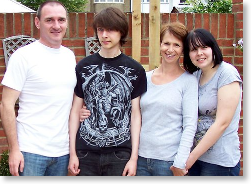
“His daughter had not met the legislated health requirement, which was partly to restrict public expenditure on healthcare and community services.”
I notice a theme. Polities with government owned, socialized medicine seem to harbor systematic immigration discrimination against autism. I hope the trend of parliamentary democracies discriminating against high quality immigrants that happen to have a child afflicted with autism is not a bureaucratically contagious disorder. In the cause of proper stewardship of the public purse, we’re in fact witness to the height of immorality.
Coming soon to a neighborhood near you!
- the awful realization that one’s child will have monumental challenges with basic skills that we all take for granted such as language, self-help skills, academic skills, social skills, employment and living arrangements with dignity!
- the fact that the parents’ economic future will be crushed due to a) the massive, never-ending cost of therapy and supervision and b) the opportunity costs of careers derailed throughout the lifespan of the family.
- the no-choice advocacy that necessarily pits parents against recalcitrant school districts, health care bureaucrats or insurance companies and government agencies who deny necessary and appropriate autism accommodation.
- the career of the mother or father that is irreparably damaged early on in the child’s treatment due to the ongoing management and advocacy required to ensure access to treatment and appropriate education.
- a society oblivious to the time-consuming and financially ruinous reality of having a child afflicted with autism
The first example of the “silver lining” of the proliferation of autism is the diagnosis of the grandchild of the founders of Autism Speaks, the Wright family. Here we have well-heeled people with a megaphone, tremendous resources, outstanding organizational ability and the wherewithal to make a difference not only for their grandchild but also for the entire population of families and children with autism world-wide.
Recently I came across another so-called draft pick who is making a difference. Dr. Ricardo Dolmetch, a neuroscience researcher, who recently joined our club of parents of children with autism. Dr. Dolmetch changed his entire research focus to make a difference. He is now working to crack the autism code to lead to a better understanding of the disorder, with the goal of better treatments and, hopefully, an eventual cure.
With every new diagnosis, the ranks of our club grow. Hopefully, there will be strength in numbers. Until a cure is found, demographic facts on the ground are sure to change the status quo to the point that society will have to accommodate the reality of having a child diagnosed with autism so that the traumatic parent advocacy burden and financial ruin from self-funded autism treatment will be a thing of the past.
Thomas Sowell Got it Half Right
Every dollar spent on children falsely labelled autistic is a dollar lost -- and urgently needed -- in dealing with the severe problems of genuinely autistic children.
Prior to the reclassification of autism in the DSM-V, I would have disagreed vociferously with his argument regarding the purported motive of politicians. Perhaps abuse occurred in the past due to economic incentives, with some children being diagnosed with autism, rather than intellectual impairment or speech and language; however, full fledged autism is so obvious that the occasional parent on the margin who conspires with a diagnostician would not account for the true explosion of children with autism that we see today. It is my view that we do have a real increase in children with autism.
Unfortunately, with the introduction of the DSM-V, we have a new diagnostic classification of autism that includes an army of children who are very mildly affected. This is going to:
- give the neuro-diversity folks legitimacy for the bogus contention that they suffer from autism and can therefore speak for children with autism who are nonverbal,
- have autism redefined as a “difference” rather than a disabling condition,
- provide “hothousing” opportunities for parents whose children do not suffer from autism or Asperger’s syndrome,
- bleed resources from children who truly need intensive behavioral treatment in order to be productive, functional adults who can live a life in dignity rather than being institutionalized
- justify the rationing of treatment from the most severely affected children due to the fact that they will not advance as quickly as the others on the autism spectrum. This rationing will come from educational systems, health-care systems and/or insurance companies.
Although I’m not sure that I would agree with Sowell’s argument that the motive of politicians is to overtax the public by using autism as an excuse, it is correct that with the new diagnostic criteria, treatment for children with autism is in danger of being rationed. So if you have a child with genuine autism, get ready for a fight.
The Latest Academic Justification to Ration Treatment is a Doozy
Here’s the summary.
Fountain and colleagues followed almost seven thousand children diagnosed with autism born in California, from 1992 through to 2001. Then they created six “trajectories” in an effort to predict how well the children will progress based on various dimensions. Although this article is full of findings that may be disturbing to parents for a variety of reasons, in my view the most dangerous findings have to do with intellectual disability and where the mother was born! The researchers found that:
“Having an intellectual disability was strongly associated with LF (Low Functioning) trajectories, as was having a foreign-born mother. Finally, children of white mothers were less likely to be LF than bloomers, as were children of Hispanic mothers (relative to nonwhites).” p. e1117
Allow me to translate: if your child at diagnosis is given an IQ test and does not score in the normal range, and/or if you are a foreign born mother, watch out! Those rationing treatment may use this article to deny your child treatment. Immigrant parents need to be particularly vigilant!
Luckily, there is one finding that can be used to argue against those rationers: The Late Bloomer. In this article, they found one group of children who are late bloomers. These children,
“… most likely to “bloom” are those without intellectual disability and those with more educated, non- minority mothers. Although we are unable to identify the specific mechanisms through which socioeconomic status affects trajectory outcomes, the intervening variables likely include home and neighborhood environments, quality and intensity of treatment, quality of education, the efficacy with which parents are able to advocate for their children with institutions providing services, and many other factors in various permutations.” p. e1118
In other words, if the child’s IQ was typical at diagnosis, and parents were better advocates with money to purchase superior treatment services, their children improved significantly.
So what do we do about the IQ tests? My view is since IQ testing is so wildly inaccurate when it comes to young children with autism, it seems criminal to seal their fate with a socially constructed test that has a decades-long history of being discriminatory in its impact.
What about minority or immigrant status of the parent? When it comes to the parent’s minority status, that’s when the discrimination becomes explicit. In short, if you smell discrimination, let this article alert you to protect yourself and your child! If you are in a minority, make sure that you find an advocate to write letters for you and attend meetings with you about your child. Keep this article in your back pocket if you suspect that your minority status is influencing the treatment or placement services of your child. When you demand equal treatment for your child, the system will be more likely to listen to you if you have evidence from a peer-reviewed journal that discrimination against children like yours has been going on for decades.
Magical Mushrooms Stirred for Autism

I recently read a treatise of sorts on the “nutritional, health, medicinal properties and possible behavioral effects” of a variety of mushrooms. This claim is being made by a Ph.D. who is also the owner of a mushroom farm. She argues that since mushrooms help to strengthen and stimulate the immune system, it is logical that they would be beneficial in ameliorating autism. Interesting theory. These claims have even been presented at the Autism One Conference, to further garner legitimacy for the wonder treatment. It is further claimed by a physician that White Mushrooms, “help detoxify the body and they may reduce the need for repeated behaviors.”
Who knew that all we have to do is stir fry some mushrooms and voila, our children’s stereotypic behavior will disappear!
Since it’s never a good idea to discount a theory merely because it sounds implausible, I did a search for peer-reviewed journal articles that test mushrooms as a treatment for autism. Although I did find an article discussing the theory, I did not find a single study comparing children being treated with mushrooms with a control group. No surprise, but I had to check!
In short, I’ll let you know when these mushroom purveyors provide some data. Until that time, enjoy your mushrooms in the stir fry.
Autism Conferences: Proceed with Caution
At the recent IMFAR conference, we apparently now have people with Asperger’s syndrome and parents joining in the “festivities.” Based on the amount of hoopla generated by this conference, it appears as though the fundamental precept regarding how science progresses has been lost on many participants at the conference.
We need to understand that there can be no short cuts when it comes to the scientific method. Circumventing the process of science helps purveyors of quackery and hurts people with autism in the long run. As difficult as may be, we need to be patient and let reputable scientists do their job.
It’s fine to have some fun at an IMFAR conference, but remember, until findings are published in a peer-reviewed journal and clinical trials have been completed, the purported “findings” from an event like the International Meeting for Autism Research, are merely preliminary, at best. Proceed with caution.
When play is no fun: The junk science of play therapy for kids with autism
First, the Wall Street Journal, in its “In the Lab” section which highlights new scientific research, apparently falls victim to the same faux elixir that journalists have lapped up for the last three decades; however, this time, academic legitimacy is being used by the Kennedy Krieger Institute in its test of early intervention play groups on children who are at risk for autism.
Second, Autism Speaks is sponsoring the Toddler Treatment Network (TTN)which researches treatments that are appropriate for children under eighteen months of age. Although the TTN is involved in research, they are also attempting to get developmental interventions covered by insurance, doing so by conflating behavioral and developmental approaches. The TTN states: “But there is no hard and fast line between behavioral and developmental approaches.” This blurring between developmental and behavioral approaches further adds confusion. Many purveyors of play therapy or child-led therapy call their so-called treatments developmental. These developmental therapies suffer from a lack of evidence in terms of efficacy. This goes for Floortime, the Playschool and the SCERTS Model to name just a few child-led, parent facilitated therapies.
What is different about these latest attempts at legitimating yet a new form of play therapy is that first, the therapy is being used with children who are at risk for autism but don’t yet have the diagnosis. Second, this form of developmental therapy is creeping into mainstream academe, despite its stark lack of supporting data regarding therapeutic effectiveness.
Should we be concerned about this latest attempt to associate play and autism treatment? Yes. I would submit the following:
- At Risk for Autism is not Autism. The Kennedy Krieger Institute conducts research on children who are between one and two years of age whom they consider to be “at risk” for autism. It is highly irregular -- and suspect -- to utilize a non-diagnosis of “at risk for autism” as the basis of research to test any autism treatment, and in this instance, a reincarnated form of play therapy. Kennedy Krieger researchers are unwittingly (perhaps) stacking the deck for a form of play therapy to register as a legitimate intervention for the condition. “At risk” for autism, is clearly not equivalent to autism!
- Even more outrageous is that the program for two year olds who have all been diagnosed with autism at the Kennedy Krieger Institute does not include best practices, which is intensive behavioral treatment; rather, these children are participating in an experimental intervention model run by a speech and language pathologist!
- The intervention model is not being tested with a control group! Are they performing comparative tests between children at risk using their form of play therapy, against children receiving best practices Behavioral Treatment for autism? No. Inexplicably, the intervention model is a form of play therapy only.
- Parents as therapists. Once again, researchers are using parents as therapists because it’s cheap! The Autism Speaks “expert” states: “One potential way to increase intervention hours is for parents to continue practice at home.” If the Autism Speaks Director of Research for Environmental Sciences had a child with autism and were to take her own advice, she would most likely have to trade her career at Autism Speaks for her new role as free parent labor for autism therapy. Only with autism do so-called experts have the temerity to suggest that parents should “treat” their own children.
- Segregation from the earliest age. We are now segregating children from their typically developing peers at age one, even before a diagnosis is made, in an attempt to “help” them.
- Proliferate a treatment with scant evidence. The Kennedy Krieger researchers have indicated their desire to transfer this “method” of autism intervention into public school settings, which will further decrease the ability of schools to succeed with children afflicted by autism.
Three decades of research on various forms of developmental, child-led, play therapy have shown the method to be utterly ineffective as a treatment for children with autism. Recent work conducted by the Kennedy Krieger Institute or the Autism Speaks Toddler Treatment Network does not appear to have changed that fact.
Don't bet the farm on this new "therapy"

A graduate student and professor from Kansas State University, Katie Kingery-Page, and Chelsey King, have designed a “therapeutic landscape” for children with autism that has the goal of integration, yet is designed so as not to overwhelm the child with autism. To that end, all kinds of seemingly wonderful sections of the playground have been designed. From a “music garden” to an “edible garden/greenhouse,” we now have a new addition to the tableau of autism interventions out there: “horticulture therapy.” In addition, developers of this intervention assure that the “therapeutic landscape “ provides lots of places to hide if the child with autism gets overwhelmed. This new intervention method is said to be designed for “building sensory experience and communication.” What a utopian landscape!
For a moment, let’s ignore the fact that there is absolutely no evidence from peer-reviewed journals to support the notion that horticulture therapy is effective in ameliorating any symptoms of autism. Let’s consider that there are two very important things missing from this seemingly idyllic wonderland, if children with autism are going to be truly accommodated in the novel protocol:
- there must be no way for a child with autism to enter or leave the space without an adult being present to allow the entry or exit,
- every single inch of that playground needs to be monitored from one area, so that there are no hidden alcoves from supervising adults. It is on the playground where safety issues are paramount! Often this is when children with autism wander off and are bullied, or worse.
Here’s the main point: if you want successful integration, the number one issue is individual child safety. For some reason, educational systems can’t seem to figure this out. They understand the importance of creating segregated sites that are like fortresses; however, the minute there is integration, the safety issue is ignored!
I suggest that these designers go back to their utopian design and look at it with new eyes. Once every safety issue is addressed, and they lose the term “therapy” to justify their design, I’m all for creating a fun place for children and their typically developing peers to interact.
George Will hits one out of the ballpark
What is interesting, though, is that Will describes parents of children with Down Syndrome as not having “any tormenting sense of what might have been” since Down Syndrome is apparent from birth. That is clearly different from parents of children with autism since autism is not obvious from birth and, indeed, most of us do have a tormented sense of a future that is not to be. After two to three years living with a baby who we expect will grow up to be a typically developing adult, we discover that our child is not developing on a typical trajectory and will need thousands of hours of treatment (and hundreds of thousands of dollars) to learn the most basic of skills. Our torment may be quite functional, though, since it motivates us to fight for effective autism treatment with the hope that our children will improve, perhaps to the point where they may, some day, become indistinguishable from their typically developing peers.
George Will also describes a world that would be better if there were more people with Down Syndrome, due to their socially pleasant demeanor. Like children with Down Syndrome, children with autism also introduce society to opportunities for everyone to challenge their own sense of acceptance or tolerance. Yet children with autism provide a greater challenge since they are not naturally sociable. In fact, our kids regularly break societal norms and often need to be taught a considerable number of social conventions. Will further mentions that 90% of fetuses with Down Syndrome are now aborted due to our societal obsession with perfection. As we become more knowledgeable about what causes autism, I fear that in the race for perfection, there may be the same rate of abortion of children with autism who are diagnosed in the womb.
What garners respect for Dr. Will is his unqualified, public pride in his son as he highlights the meaningful life that his son enjoys. It is heartwarming that when Jon Will independently negotiates public transit to spend his days enjoying life, sitting in the stadium rooting for his favorite baseball team he is truly an equal. At the end of the day, a happy, independent life is the ultimate goal we have for our disabled children as well.
Successful Autism Integration: How it makes ALL kids better human beings
Unfortunately, there are often barriers created by a variety of people, particularly a small percentage of parents of typically developing children. These parents see no benefit for their children to be integrated with children who are challenged with special needs. This is particularly true when it comes to the integration of children afflicted with autism. Let’s face it: our children are not always reinforcing for others and they often behave in ways that completely ignore social norms. This can create discomfort for some.
However, what many parents of typically developing children do not understand is the tremendous value of successful integration of the disabled for their typically developing children.
So what is the value of successful integration for typically developing kids? Here is a partial list.
Typically developing children:
- learn not to prejudge the ability of others
- learn how to break down skills and teach them to others, thereby becoming excellent teachers
- are exposed to exceptionally positive role models in the form of therapists, psychologists and tutors
- receive much more positive adult attention than they otherwise would in a large group of children, since successful integration requires the adult/child ratio to be greater
- learn to feel very good about themselves and their ability to lead
- are forced to look beyond their egocentric world and see that there are others in the world with real challenges, who are far less fortunate only because they drew the short straw in life’s lottery
- become very comfortable with people who are disabled
- learn empathy
- are protected from bullying due to the increased adult supervision that surrounds children with autism
- are provided more enriching opportunities due to the adults who often orchestrate and/or design rich social interactions
- are exposed to potential career opportunities and lucrative job prospects
- have a great experience to put on their resume when applying to college
That’s a long list of very valuable benefits to integration; however, the most important benefit for typically developing children when they are properly integrated and interacting with children who suffer from autism, is that they learn to become decent human beings. I think most would agree we can use more of that in our society.
Many parents send their children to faith-based organizations to learn how to be a person with good values. Just add a child with autism to the mix, and the learning process is greatly accelerated.
Trust, but verify
Here’s the update.
A ten year old child was bullied by his special needs teachers in a classroom that was designed to teach children with autism! This behavior was uncovered by a smart father who wired his child with a recording device and thereby discovered the horrendous daily torment his child was experiencing. The father, Stuart Chaifetz, created a video and posted it on youtube to expose the disgusting practice which occurred in the Cherry Hill School District in New Jersey.
Chaifetz, is attempting to clean up the school district and rightly so! His goal is to pass legislation that requires teachers to be fired immediately upon discovery of bullying behavior. He has a petition that he’d like people to sign.
I’d like to suggest that this does not go far enough. What is required in my view, is systemic change. The failure here is not about people, but rather, about a system where there are no checks and safeguards to protect disabled children.
There is one solution that is quite straightforward. Parents need to have a choice regarding whether they would like their child in a special needs classroom that has constant video surveillance. Those parents who choose this type of classroom for their children will never have to worry again. There are those who would argue that teachers’ rights are infringed upon due to this type of surveillance. In a contest of competing rights, it’s obvious the child’s rights must always trump the rights of the worker.
Until there is a 100% reliable way to verify that children with special needs are being treated properly, regrettably this type of abuse will continue. We need good systems, not good intentions!
If you’d like more detail about this horrendous incident, here is the video created by Stuart Chaifetz, the child’s father.
Autism Integration Mustn't Be a Boilerplate Approach
Recently I heard an interview given by a blogger, Harold Dougherty who describes his child being forced into an integrated setting that was a disaster for his son. He describes the new bureaucrat in charge as being an integration extremist, with very bad consequences for the child. This situation is outrageous!
The issue is not segregation versus integration, but rather that children should never be FORCED to be either integrated or segregated. Instead of being placed in a setting that works best for the child in consultation with the child’s treatment team, some children are apparently placed based on a) the philosophy of the reigning bureaucrat or “educrat” of the day and/or b) the cheapest placement for the school district.
Every child should have the right to be integrated when the integration works FOR THAT CHILD. When an integrated setting is inappropriate and does not work, the answer is not a segregated setting with a group of children who are being ghettoized but rather, one-on-one treatment that is customized for the specific child with autism. Then, the treatment professional can grab every possible integration opportunity available for that child when it works, and can work toward integration opportunities when the child needs to learn pro-social behaviors and routines prior to the effort at integration.
To illustrate, it may be counterproductive for an untreated child suffering from severe autism to be placed in a calculus class. Prior to placing the child in the integrated setting, he or she needs to learn the skills and routines to be successful in that setting. This goes for educational settings as well as recreational settings.
Put simply, the autism treatment team, along with the parent, should be making all integration decisions for the child rather than the school district!
For any education bureaucrats out there, remember, Individual Education Plans (IEPs) are called “individual” for a reason!
A "How To" Guide for Autism Junk Science
Here’s the background.
The Ontario government has created a set of benchmarks to monitor progress and facilitate clinical decision-making for children in behavioral autism treatment programs. In the vernacular for the rest of us who are outside of government-based healthcare or social services, “benchmarks to facilitate ...decision-making”, means rationing of care. The general idea is to deny ongoing treatment for children with autism who don’t progress quickly, per a set government-approved schedule. This, of course, is to the benefit of the public purse at the expense of children with autism.
Regrettably, this article, Testing the Application of Benchmarks for Children in Ontario’s IBI program: Six Case Studies, is now being used to ration autism treatment in the Province of Ontario. Ontario’s method for rationing treatment can only work if junk science is credibly crafted and packaged with faux legitimacy.
Here’s the “how to” ... 5 easy steps to junk science, using the Government of Ontario’s latest gambit as an illustration (although this works equally well in any country with socialized medicine):
- Create a substandard patchwork of programs to treat children with autism, but slap a label on them that reads, “Intensive Behavioral Treatment (IBI).” In other words, use the language of science for programs that are utterly devoid of it.
- Non-randomly observe six children who have completed the substandard, government IBI program (the “direct service model” staffed by government workers). Then use a “case study” method to measure the progress of these children, since scientific rigor is too difficult and costly, and harder to manipulate by self-interested government technocrats. Do not include children who are in high quality programs since it would be inconvenient to provide evidence that children make considerable progress in non-government controlled, privately run programs.
- Create “benchmarks” for terminating treatment based partially on American benchmarks that were not rigorously peer-reviewed. These local so-called “Made in Canada” benchmarks provide government the tools with which to fail kids with autism and thereby prematurely end treatment i.e., ration care.
- To six children, apply these government benchmarks, created by government-owned academics who receive a variety of research contracts directly from government departments and are government witnesses testifying against children with autism in court. Then provide bogus evidence regarding the efficacy of the government funded benchmarks.
- Publish the “evidence” as to the efficacy and appropriateness of these benchmarks in a third-rate Canadian journal where one of the two authors happens to be on the editorial board and the other is the treasurer of the association that publishes the journal. The corrupt academic article then provides scientific legitimacy for government lawyers when these benchmarks are challenged in court.
And Viola!
You’ve created government-approved junk science in five easy steps. Let’s hope Ontario judges are onto this corrupt game and remember what happened the last time junk science was introduced in a Canadian court to defend the Government of British Columbia against the serious charge of constitutional discrimination against children with autism. Dishonest academics in bed with dishonorable government is as ugly now as it was during the landmark Auton Case.
Does Floortime Therapy Work? We're still waiting for the evidence.
Finally, in 2011, there was an attempt to add scientific rigor to the testing of Floortime autism treatment. Recently, the Canadian Broadcasting Corporation (CBC) showcased Floortime Therapy and the purported science supporting the therapy.
I watched with great interest as a professor from York University was interviewed regarding this so-called “break through” in autism treatment. I took down the name of the researcher and started to look for the peer-reviewed journal article created by this researcher from a legitimate university. I couldn’t find a 2012 study, so I wrote to the research center and they kindly sent me the latest article, which was actually a 2011 article that I had already read. In the 2011 study I received, there was no report of the brain scans that were highlighted in the CBC news clip. When I contacted the research center, I was told that the information on the brain scans had not yet been published.
Since there has been so much publicity regarding this latest article, I’ve decided to present a short analysis on the 2011 Floortime study conducted by Casenhiser, Shanker and Stieben.
The article’s strengths:
- They recruit fifty-one children for their study, which is a relatively large number in autism research.
- There are two groups of children (an experimental and control group).
- They attempt to randomly assign children so that both groups would be similar prior to the treatment being administered.
- The authors very honestly describe the limitations of the study, instead of attempting to hide them (which is so often the case in autism treatment research).
The article’s weaknesses as described by the researchers involved in the study:
- The control group receives a large number of different treatments in a completely uncontrolled fashion.
- The experimental group receives more hours of treatment than the control group (which is, in my view, a fatal flaw since the variable “intensity” is not controlled).
- There is no I.Q. testing conducted prior to and after the study. I define this as a major flaw since it is crucial to understand whether or not treatment would affect the cognitive skills of a child with a developmental delay or disorder.
- There is a severe self-selection bias, not only regarding which families sign up for the study but more importantly, which children drop out of the study to gain access to a 20-30 hour a week government program (13 children from the control group and 9 children from the experimental group). Even the authors understand how problematic this is when they state: “The authors, therefore, caution against drawing the conclusion that a 20 hours per week program (such as the Intensive Behavioral Intervention program funded by the government of Ontario) can be easily replaced with a 2 hours per week program without regard for how well the requirements of the program fit the needs and resources of each family)” p. 18
Additional Weaknesses:
- The researchers in the Learning Through Interaction in Children with Autism 2011 study use the wrong control group; they need to compare Floortime with a control group that is receiving what is considered “best practices” for autism, which is currently Intensive Behavioral Treatment.
- In this study, children were not diagnosed with autism by a specific psychologist with expertise in autism. Researchers rely on diagnoses made prior to the study from a heterogeneous group of clinicians. This is a severe flaw because we do not know the quality and accuracy of those diagnoses. Since autism is a spectrum disorder, one clinician’s Asperger Syndrome diagnosis may be equal to another clinician’s Autism diagnosis.
- Tools used to measure improvements in the study were developed by the original proponents of the therapy. Using subjective measures to indicate whether a treatment is successful is forbidden in science. The tools used to discern improvement must be independently developed and tested prior to their use in an experiment. There was only one objective measure developed from the field of Speech and Language Pathology. There must be more objective measures in general, and from the area of Speech and Language specifically (and even this one objective measure did not yield a difference between the experimental and control group).
The central weakness of the 2011 study:
- Due to an attrition rate of 43% of the children from the study, we have no way of knowing whether the more severe children left the study to be provided Intensive Behavioral Treatment. It has been my observation over the years that parents of children whose autism is more severe tend to gravitate towards programs that are highly behavioral in nature, since such programs tend to provide better results more quickly. Did the abandonment of the Floortime study by these parents result in a biased group of mildly affected children remaining in the Floortime study? We don’t know; however, we do know that this study has so many limitations that it provides no evidence whatsoever that Floortime Therapy is effective. The fact that almost half of the subjects at the beginning of the study were not there at the end, should disqualify the entire effort for any serious scientist or public policy official.
Bottom Line: Based on the studies that have been conducted to this point on Floortime, there is no evidence to suggest that Floortime is an effective treatment for autism.
We eagerly await the solid evidence!
An Autism Treatment Mirage Arrives from the Desert

Here’s the justification given for using camel’s milk to treat autism: There is a theory that autism may be caused by some type of inflammation. Camel’s milk is thought, by some, to have an ameliorative effect for symptoms of autism by reducing inflammation. So why not give camel’s milk to children with autism?
Here’s why:
1) There are no controlled studies published in peer-reviewed journals that support camel’s milk as a treatment for autism.
2) Camel’s milk can be dangerous due to the fact that:
- the milk is raw.
- it comes from animals that can harbor TB and E-coli.
- milking techniques are often unhygienic.
- it’s difficult to get milk to market safely due to lack of refrigeration in areas where most people raise camels, i.e., from desert nomads.
3) This so-called treatment has very compelling testimonials given by highly motivated parents, supported by purveyors of camel’s milk who don’t seem to be disturbed about the lack of science behind this purported treatment. Uncontrolled parental observations of their children’s behavior after having been given camel’s milk, is all there is to support parents’ belief that camel milk is improving their children’s symptoms of autism.
Does camel’s milk treat what ails kids with autism? Who knows, but until there is some science-based evidence as to measurable benefit, we need to categorize this latest theory as untested at best, and potentially dangerous at worst.
The proponents of camel’s milk (and there are a few) need to show us the data that supports their claims of efficacy. Until such time, Camel’s Milk Treatment remains filed under quackery.
Memo to Huffington Post: autism treatment is about kids, not parents
To illustrate, although taking valium may help a parent cope, and making sure that one’s name is on all joint assets may be helpful in the event a spouse leaves the relationship, these things do nothing for the child. However, if the parent takes effective steps to improve their child’s situation, valium will be needed less and the marriage will likely be more harmonious. Life would be less stressful and something that together, as a team, the family unit can better withstand. Here are my “10 Things to Do After the Diagnosis”:
1) Find a parent group in your area that supports science-based treatment which is, currently, Early Intensive Behavioral Treatment (EIBI) based on the principles of Applied Behavior Analysis (ABA).
2) Join the Me-List on FACEBOOK and the Me-List on Yahoo. Both these groups are comprised of parents worldwide who have treatment teams up and running.
3) Find out if you live in a region where insurance companies are required to provide coverage for EIBI autism treatment. Find how parents in your region are funding their children’s treatment programs.
4) Source a list of Behavioral Consultants in your region with expertise in EIBI. If you don’t have any local expertise, here are a few national companies.
5) Phone the Behavioral Consultants you find and have them provide three references from parents who use their services. If they won’t give you references, go to the next consultant on your list. There is a certification board for this group of professionals and you can find them in your search, via zip code; however, make sure that their expertise is autism.
6) Once you hire the Behavioral Consultant, start recruiting for your treatment team.
7) Set up a training session for your team and start your program. The first couple of weeks are somewhat of a shock, but then you’ll get into a routine.
8) Start reading the right books. I have a list on the Autism Pundit bookshelf.
9) Sign-up for the Association for Science in Autism Treatment’s Newsletter and get savvy about how to differentiate science from quackery!
10) Breathe. If you follow the above steps, your child will reach his or her potential, and you have no idea how great that potential may be!
As a parent who has been in the autism universe for over two decades, I’m of the view that these steps are going to get you where you need to go. For now, ignore all the other noise out there. Your job is to get your child into a treatment program A.S.A.P. Nothing else will matter until your child has access to high quality treatment.
News flash! Mom's of autistic kids make less money!
It’s 14 years later and this “new” breakthrough, published in the Journal Pediatrics in 2012, has just been reported around the world by Reuters News. In 1998, researchers noted that women with disabled children were disproportionately employed part-time. In 2012, it was reported that mothers of children with autism earn 56% less than those without a disabled child, they are employed less, and when employed, work 7 hours a week less than mothers of non-disabled children.
Don’t you think it’s time to solve this problem instead of rediscovering it with ever increasing precision over the years? Any parent of a children afflicted with autism can give you a content analysis of their day. It’s full of managing crises, coordinating schedules, managing treatment teams, and completing paperwork. Added to this is the daunting task of functioning as the child’s rights advocate, in seemingly endless struggles with government functionaries in educational, medical, social welfare and legal departments.
The Solution? It’s easy to say, but hard to achieve. The sooner parents of children with autism have access to high quality treatment and education for their child from the moment of diagnosis to adulthood, and humane living arrangements for their adult disabled children, the sooner parents will be able to concentrate more energy on their careers instead of disproportionate effort on their child’s well-being and equal access to services and education. Until such time, be prepared to see more of these “groundbreaking”research articles that measure yet another aspect of human misery.
Canada needs YOU ... unless your kid has autism.
“Investigators working in Canada and those willing to relocate to a Canadian research institution are eligible for the Chair... The Chair’s application form is available on [Canadian Institutes of Health Research] CIHR’s website.”
Bright autism talent is being invited to Canada! That sounds great, until we learn that the immigration side of Canada’s vast bureaucracy excludes foreign researchers that happen to have a child with autism.
You hear that right.
The same week that the new autism research chair was announced by one hand of Canada’s government, the other hand invokes its policy of autism discrimination, wherein a professor of psychology is being denied Canadian citizenship because his child has a diagnosis of autism. The professor, Dr. Jeffrey Niehaus, now has no choice but to leave the University of Victoria, to return to the United States, and relocate to a university in Virginia.
The link below has the video news clip of outrageous Canadian immigration bigotry.
The irony of trumpeting a research position in autism that cannot be filled by a parent of a child with autism is not only bizarre, but also a profound affront to the basic decency of Canadians. Clearly, people with disabilities continue to be third class citizens in a country that prides itself on fairness and kindness.
Once again, hypocrisy, thy name is Canada.
Groundhog Day the Movie, Extended Autism Edition
Unfortunately, the tragedies seem to never end. The most common and horrendous is where a parent takes their life and the life of their autistic child because they’d rather be dead than continue with the unbearable nature of this life. Last week was no exception. The latest autism related suicide/murder occurred in the San Francisco Bay Area.
At about the same time, a typical media feel-good story was publicized, this time about Savantism. Most often the type of talent showcased is music. In this case, it was about a singer with autism. We’re all supposed to suddenly feel good that this one person’s talents have finally been recognized. Although the singer should be applauded, it is troubling that it takes so long for those around him to recognize his skills and work with him on developing them further. He was three years old when he was diagnosed with autism. How could it have possibly taken 23 years to recognize his abilities?
The next popular news story typically concerns a high functioning person with autism (who actually may have Asperger’s Syndrome) being showcased as a representative for all people with autism. Last week, the representative with autism media chose to highlight is Dr. Temple Grandin. She is once again in the news, giving insight from her life to parents of children with autism. Whether a person who is as accomplished as Dr. Grandin can accurately represent all people with autism is never questioned, since that would be unseemly; however, it is always in the minds of parents whose children are severely afflicted with the disorder, insofar as their child is light years apart from a Dr. Grandin level of functioning.
Another theme that is endlessly rehashed with every newly minted media reporter is the “blame the parent” theory. There are several varieties of this meme. The theories morph from blame the mother, to blame the father, to finally blame the pair-bonding process wherein parents of children with autism apparently self-select each other and thereby create children with autism. Although these tired theories continue to bore us as they are introduced anew, they always remain offensive in nature, with each new crop of reporters that resurrect them.
A relatively recent autism theme that is introduced repeatedly, seemingly week after week, is autism segregation under the banner of compassion. The latest story is about special religious services for children who are too disruptive to attend regular services. We’re all supposed to feel warm and fuzzy about this segregation rather than incensed that 1) our community cannot be more tolerant of disability and accommodative, and 2) that no one is working with these kids to teach them the skills they need to be able to attend a regular service.
It would be great to wake up one fine morning and read about a genuine breakthrough in autism treatment, or even a scientifically backed cure! It would be wonderful to never hear of another autism murder/suicide or more pap from green horn reporters about “newly discovered” discredited therapies, but I don’t hold my breath. We parents of children with autism are seemingly forever in Groundhog Day the Movie, Extended Autism Edition.
Your Child’s Autism is Not a Theory!
It also doesn’t help that this psychologist’s case dredges up the “lack of love” angle as a cause of autism (which reminds us all of the infamous Refrigerator Mother Theory, the less well-known Detached Father Theory and finally, the sophisticated Assortative Mating Theory). Despite this debacle, which was sufficiently controversial that the Irish Examiner actually pulled the article, a couple of points do need to be made.
Autism is definitely real; however, the causes of autism are not yet well known. Much good research is being conducted and many theories as to the causes of autism are being researched. Unfortunately, we do not yet know how to measure autism biologically. We can neither count blood cells nor measure proteins to determine whether or not a child has autism. The diagnoses are always behavioral, which is not adequate, but that’s all we currently have. One day, though, we will actually know the causes of autism. In the same way we know “fever” is a symptom of underlying disease rather than a diagnosis on its own, autism may similarly be a symptom of one or more conditions.
For parents of children with autism, this difference may be no more than semantics, despite the fact that researchers will be gratified after years of research. The term autism may eventually come to describe a group of symptoms, but when your child needs help, does it really matter? Let the Irish Examiner experience be a cautionary tale for the next autism expert who wades into autism’s very deep waters.
Parents as autism therapists - a morally bankrupt policy!
The bogus legitimacy given to the “parent as therapist” model has been around for a long time. The logical allure for government is to have policy makers conscript free parent labor as this saves governments and health insurance companies money. Savvy parents have understood this dynamic and have fought to have professionalism brought to autism treatment. Many have insisted on the use of board certified behaviorists with expertise in autism.
In the case of the parents referenced in the article, the government efforts have met with success. Parents have completed a course that the reporter calls “innovative” because parents of children with autism can graduate with a course certificate after having been taught by a nurse with only a minimal background in behaviorism! The fact that these parents are so thrilled with a course that teaches them very basic tools to deal with their children with autism is disturbing since that means that they are getting no professional treatment for their child’s condition. Imagine if parents of children with cancer took classes from nurses on how to treat their child’s cancer! This would be considered scandalous, but where autism is concerned, the children of a lesser god can be denied professional care, be offered “good enough” and reporters cheer! Parents, your children deserve better!
How To Skate Around Discrimination
I can’t believe that I’m still reading about the same issue twenty years later! In this article, the parents were savvy. They quickly went over the head of the luddite who has no concept of the term “accommodation” and called the media. In this case, the media did their job and put pressure on the mayor, who immediately realized that this flawed policy must be changed. Kudos to those smart parents who leveraged the media to change a policy that is going to help every child with special needs who follows. I’ve written in the past on how to address this problem in a non-confrontational manner; however, since this pattern keeps rhyming, it is worth revisiting the issue.
Based on the lessons learned from this news story, here are the following steps you may consider taking when you sniff a potential problem when integrating your child: first, approach the person in charge of registration and with a very energetic, positive demeanor say that you’d love to have your child learn how to skate (swim, dance or whatever); however, due to your child’s special needs, you have a shadow aide, or helper, to provide free of charge to the class to support your child. You may want to add that this person knows your child quite well and will only jump in when your child has a problem understanding the directions given by the instructor.
One of two things will happen: the manager will say yes, or no.
If you are given permission, congratulations! If the manager is amenable (and you feel comfortable), then you may add that it would be less stigmatizing for the child if the helper could wear a T-shirt with the name of the rink on it, and thereby keep the children and parents guessing regarding who this second adult is in class. Your child’s shadow will simply look like a regular volunteer, not necessarily there for your child.
If the manager declines, then it is time for step two: phone your local paper and set up an interview about how the publicly funded recreation center is discriminating against a disabled child. If the reporter is not seasoned enough to interview the mayor, you might want to suggest it. In addition, if you are lucky enough to live in a country with laws protecting your child, you may want to mention those laws to the reporter. If you want to make the rubble bounce, it may be useful to send the reporter a link to the website with those laws, and copy and paste the specific part of the law into the body of the e-mail. If you are not lucky enough to have those laws at your fingertips, another idea is to contact all the various disability groups and mention that it may be a good idea for them to contact the reporter and their politicians. The pressure put on these folks will generally be too much to handle and accommodations will be made.
Ironically, once you succeed in integrating your child and they realize that life as we know it did not end, the recreation center will celebrate its success in being so open-minded and progressive! Let them own your victory; that will help the next child in line, and that child’s parent who will have no clue that the reason it was so easy to include a shadow teacher is because of a bloody minded parent who preceded them.
Here’s to bloody-minded parents!
Updating Autism Treatment Tools, One App at a Time
As I mentioned previously, for most of us it is obvious that the Apps designed for an iPad are not stand alone therapies! The Ipad is simply a better way for children to access what they were already using. It’s analogous to a typist switching from an IBM Selectric to a computer which is faster and, therefore, much more efficient.
Let’s take a few examples: in the case of the iPad, if a child is accustomed to using icons, and now the icons are on the iPad instead of velcroed onto a bulky-looking sheet of paper in a three ring binder, the icons may be more effective since they are faster to use; however, the basic idea is the same (with the improvement that the child is not stigmatized by a big, clunky, binder). Another example: if a teacher uses the iPad to have the child trace letters with his finger rather than on a sheet of paper, that is certainly more efficient; the teacher is simply using new technology on tried and tested old techniques. A final example is teaching using flashcards: the iPad may have a bigger, better, more vibrant library of flash cards that can be used to teach labels; however, it is still the science-based, discrete trial training that is being used to work with the child on labels.
The iPad, used properly, is a godsend for children with autism! Autism Speaks shouldn’t worry: we parents are certainly smart enough to figure this one out!
Finding Religion to End Run Autism Education Discrimination
What happens, though, when this is not the reality? Parents have three choices: 1) they can accept the sub-standard educational experience offered to their child and live with this depressing reality for 13 years, 2) they can fight the system, getting the lawyers to communicate in a way that makes the school do the right thing (often mortgaging their house to pay for the fight), or 3) they can place their child in private school.
Here’s where religion comes in. When shopping for a private school, it may be wise to “find religion” because your odds of finding a private school that will actually take your child increases once you add parochial schools to the mix! In addition, many religious private schools are not as expensive since they are often subsidized by members of the associated congregation. An additional benefit is that your child becomes a member of a peer group that is being taught kindness and inclusion for special needs children as part of religious teachings.
Not all religious school administrators are equally open-minded; however, you can visit a number of parochial schools until you meet a religious leader who is sufficiently pious to do the right thing. The advantage of a private school is that you are the customer and, therefore, the school has more incentive and flexibility to meet the needs of your child.
Sometimes it’s worth fighting the powers that be to make sure your child has access to the neighborhood school and, therefore, the neighborhood kids; however, sometimes the battle may be too painful, onerous or impossible to win. When the battle against intransigent public schools hits the wall, it may be time to find a welcoming religious community to provide your child with a viable alternative.
We Parents Need to Improve our Chess Game
In the past decade, there has been a concerted effort on the part of many parents to make sure that autism and Asperger’s syndrome are differentiated as two distinct diagnoses.
Separating autism from Asperger’s syndrome has been important for several reasons:
- the needs of these two groups vary considerably,
- people with Asperger’s syndrome should not be stigmatized with autism, which is a much more debilitating condition,
- people with Asperger’s syndrome should not feel that they have license to speak for people with autism, &
- it harms people with autism to be considered the same as those with Asperger’s syndrome because, generally, they need much more in the way of treatment, support and supervision.
Opponents to the amalgamation of the two diagnoses say that it is meaningless to differentiate between the two categories because some high functioning adults with autism appear identical to adults with Asperger’s syndrome.
I have always thought that this was a function of effective autism intervention and look at this “problem” as success! I am prepared to live with the concept that great intervention may lead to a change in diagnosis.
In addition, many parents of children with Asperger’s syndrome were worried that differentiation in the Autism Spectrum Disorder may possibly lead to a decrease in services for their children. I understand the sentiment and know that those who fund treatment are generally very quick to pull funding whenever they can; however, I’ve always thought that this path ultimately harms all children with autism spectrum disorder.
Now we see it happening. By eliminating the Asperger’s syndrome diagnosis through its supposed amalgamation into autism, not only have people with Asperger’s syndrome been denied their own diagnosis, but also many people with autism are without a clearly defined diagnosis even though they still have autism.
In other words, the powers that be have just put our children’s future in jeopardy. The question is can we get out of trouble, or will we be outmaneuvered?
Chalk one up for the good guys!
The Internet is abuzz with the latest film on autism to come out of France. This film tips the “pomme” cart, and I say “Bravo”! The film is called: “The Wall; Psychoanalysis put to the test for autism.” It is a must watch film. I suggest you do it quickly before it’s forcibly removed from the Internet. This film has been banned by a French court, hard as that may be for a non-European audience to comprehend. The filmmaker is appealing the ruling.
Decades after the debunking of the theory that mothers cause their child’s autism, first posited by Bruno Bettleheim and embraced by the field of psychoanalysis, the insular French psychiatric community is still flogging the dead horse, with an incomprehensible disregard to the scientific advances that have been made in the rest of the world over the past 60 years. Quantitative data collection seems to be utterly irrelevant for these folks; however, with the growing popularity and reach of the Internet, parents in France have learned the basics. They’ve got us beat when it comes to food, perfume, fashion and pretty much all the finer things in life, but when it comes to autism treatment, well… not so much!
Francophone parents with autism have been historically so isolated in terms of up-to-date materials that I actually had my book, Teach Me Language, translated into French as Apprends-moi le langage, because I had so many requests from French speaking parents and speech language pathologists. I also felt that it was a tremendous injustice that children in the Francophone world had been left to the mercy of the psychoanalysts for so-called “treatment.”
I was delighted to read about a film comparing the backward, flat-earth type, psycho-analytic approach to autism intervention with the science-based approaches we’re accustomed to in the U.S. and Canada. The courage of this documentary filmmaker, Sophie Robert, is remarkable. She is standing up to the powerful French psycho-analytic community. The psychoanalysts were given almost the entire film to describe their dubious theories, and now three of them have the gall to sue the film maker because they claim that they have been misrepresented!
This is a real test for France: is the nation truly a republic with an independent judiciary that will consider science and data, or will they be intimidated by the powerful psycho-analytic traditionalists who’ve had free reign over children with autism since the term autism was coined. Filmmaker Sophie Robert has done something important for the community of parents of children with autism worldwide. We need to support her.
The widely known “Secret” is being tested… Finally!
Those of us who believe in the scientific method, feel somewhat sheepish in recommending melatonin since it has never been tested properly on children with autism for sleep. The hormone melatonin is not proprietary; therefore, historically no drug company has had an incentive to do clinical trials. In addition, the anecdotes have been mixed. Melatonin seems to work with some children and not for others. Some parents use the sublingual variety of melatonin (under the tongue) whereas other parents manage to successfully use the time-release capsules, where the child must swallow the entire pill since by crushing it, the time release no longer works. In short, in Melatonin we have had a potential treatment for autism related sleep disorder but no one with an economic incentive to test it properly.
In the past five years, however, researchers have been examining the effect of melatonin on sleep and have reported mixed results. In April 2011, a research article was published reviewing 35 studies that looked at the relationship between melatonin and autism.
Their review found significant improvements in:
- Sleep duration. Children with autism slept much longer using melatonin
- Sleep onset. Children with autism went to sleep faster using melatonin
- Night wakening. Researchers did not find a difference in number of night-time wakenings.
Clearly, we need more studies done on the relationship between sleep and melatonin in children afflicted with autism. The effect on night wakenings needs to be replicated in a controlled study to make sure that this observation is correct.
In the meantime, for those parents suffering from serious and prolonged sleep deprivation, it may be worthwhile to have the child’s pediatrician or neurologist read up on melatonin to see whether the supplement is worth exploring for your child. Since the article reviewing 35 studies reported minimal to no side effects for melatonin, it may be worthwhile to try melatonin under the supervision of the child’s health care professional.
Oxytocin and Autism: add another theory with no data to the talley
Legitimate researchers, conducting a variety of human & primate studies, have reported that those with higher levels of the hormone oxytocin exhibit more affection and pro-social behavior than those with lower levels of the hormone.
From these findings, the article in the Daily Mail, quotes a researcher who suggests: ”oxytocin breaks down normal social barriers.” The headline of this article states: “’Cuddle hormone’ which makes mothers kinder could help treat autism.”
Here’s where the trouble begins! I have nightmarish visions of parents paying money to a fly-by-night clinic to administer the hormone oxytocin to their children in much the same way as parents are flying to Panama to shoot their children up with stem cells! The key here is to wait! Research needs to be conducted, published and replicated on children with autism before we start widely administering oxytocin to kids. Let’s try not to have a replay of the secretin debacle!
How music can help the non-verbal child with autism: we may be on the verge of something exciting!
Over the past fifty years, many have noticed that some people with autism seem to respond very positively to music. Hundreds of articles have been published on this topic and studies have been designed to show how music helps children with autism. Unfortunately, none of these studies has shown any kind of reliable results, until September 2011, with the publication of Auditory-Motor Mapping Training as an Intervention to Facilitate Speech Output in Non-Verbal Children with Autism: A Proof of Concept Study
Finally, a protocol has been designed that actually tests a way to use music to help older, non-verbal children to acquire simple words. The technique, Auditory-motor-Mapping Training (AMMT), was originally designed to help stroke victims regain speech after a stroke. Testing this technique on non-verbal children with autism is an intriguing idea! It is refreshing to read that these researchers state that their first study is purely a proof of concept study and that more research is necessary. It is very rare, and much welcomed, to hear this kind of statement from researchers in the field of autism research.
If you are the parent of a non-verbal child, this area of research is worth following. Although the study’s sample size is very small (6 children) and the experiment compared the children’s baseline scores to their results after the treatment (with no separate control group), the results were so strong that this deserves to be replicated with a larger sample and a well-controlled design.
What I find very exciting is that these researchers 1) understand the limitations of the first study, and 2) have just received a grant to do another study which will hopefully include more children, and use a better experimental design without the limitations of the original proof of concept study.
I can’t wait to see the results of the next study! I’ll keep you posted.
Intensive Behavioral Intervention for Autism: The Fight for Coverage
With recent medical innovations in both technology and treatments, new therapies have been developed and shown to benefit those children with Autistic Spectrum Disorders. One in particular is Intensive Behavioral Treatments (IBT). The legal fight for children to receive this treatment has been an ongoing one.
But first, what is IBT? IBTs include Applied Behavior Analysis (ABA), Early Intensive Behavioral Intervention (EIBI), and Intensive Behavioral Intervention (IBI). These treatments are exercises and techniques consistently applied to autistic children for several years, for 25 to 40 hours per week; children usually work with a therapist, paraprofessional, parent, or some combination of some or all of said people. However, the involvement of children’s parents throughout the process is imperative to its success.
Beginning treatment concentrates primarily on improving behaviors such as:
General social responses
Self-stimulating behaviors
Socially non-aggressive behaviors
Early on, children are rewarded for good behavior with food although this reward is very quickly faded to non-food reinforcers; all throughout therapy, bad behaviors are rewarded with neutral responses.
Intermediate treatment concentrates primarily on:
Peer interaction.
Teaching children language skills.
Advanced treatment concentrate primarily on:
Observational learning in social settings.
Proper social emotional responses and expression.
The teaching of basic education skills.
So where is the U.S. in terms of making these therapies not only more available, but mandated for insurance to cover? As of November 1, 2011, the following 29 states have passed autism insurance reform laws according to austismvote.org:
Arizona - Enacted March 21, 2008
Arkansas - Enacted March 4, 2011
California - Enacted Oct. 9, 2011
Colorado - Enacted June 2, 2009
Connecticut - Enacted June 9, 2009
Florida - Enacted May 2, 2008
Iowa - Enacted April 29, 2010
Illinois - Enacted December 13, 2008
Indiana - Enacted May 3, 2001
Kansas - Enacted April 19, 2010
Kentucky - Enacted April 14, 2010
Louisiana - Enacted July 2, 2008
Maine - Enacted April 12, 2010
Massachusetts - Enacted August 3, 2010
Missouri - Enacted June 10, 2010
Montana - Enacted May 5, 2009
Nevada - Enacted May 29, 2009
New Hampshire - Enacted July 23, 2010
New Jersey - Enacted August 13, 2009
New Mexico - Enacted April 2, 2009
New York - Enacted Nov. 1, 2011
Pennsylvania - Enacted July 9, 2008
Rhode Island - Enacted June 30, 2011
South Carolina - Enacted June 7, 2007
Texas - Enacted June 15, 2007
Vermont - Enacted May 27, 2010
Virginia - Enacted May 6, 2011
West Virginia - Enacted April 1, 2011
Wisconsin - Enacted October 19, 2009
The following 14 states, according to autismvote.org, will pursue autism insurance reform laws in 2012:
Alabama
Alaska
Delaware
Georgia
Hawaii
Maryland
Michigan
Minnesota
Nebraska
North Carolina
Ohio
Oregon
Utah
Washington
And unfortunately, the following states are not pursuing autism insurance reform laws at this time:
Idaho
Mississippi
North Dakota
Oklahoma
South Dakota
Tennessee
Washington, DC
Wyoming
The fight for coverage of IBTs is ongoing, but it has been a successful one. If things continue as they have, it is only a matter of time before all states mandate that IBTs be covered by insurance.
Allison also writes about medical malpractice on her website, Medical Malpractice Lawyers.
I sure hope autism centers aren't stealth segregation
At first glance, the concept of an autism center sounds ideal and supportive of children with autism, but we need to ask whether segregated treatment or educational centers are really the best way to go for this population of children. If an autism center is a place to train professionals or have weekly team meetings, I understand the role of the center; however, if an autism center is a place where children are segregated from the population at large at the earliest age, I think we, as a community, are making a huge mistake.
Integration and inclusion are easiest when children with autism are young. My fear is that if we segregate kids when they are young, we may be sealing their fate as segregated middle schoolers, high schoolers and adults. It becomes increasingly difficult to integrate children with autism as they get older, so if we do not start young, we may never begin. Children with autism need to learn typical school patterns when they are in preschool and kindergarten so that by the time they reach fourth grade, they only have to be challenged with the curriculum rather than the potpourri of social and instructional skills that they’ve learned from preschool. If we keep postponing integration, we will inadvertently rob kids with autism of a typical childhood.
Although every child is different, many children can begin integration as preschoolers after six months to a year of intensive treatment. Some children will need a trained aide to accompany them; however, it very often is still the right time to integrate these young children.
If new autism centers are places to guarantee integration, that’s a great use of the generosity of good people; however, if they are gold-plated segregated sites, I fear we are sliding into the bad ole days of systemic segregation.
Autism Hero
Dr. Gary McAbee, has created a new medical-legal partnership that specializes in autism, which means that not only is the parent of a newly diagnosed child going to get great advice on how to access treatment, they will also be able to get advice on advocacy for their children in terms of funding rights, treatment access and school placement.
What’s great about this partnership is that Dr. McAbee has created a great marriage: the Legal Services of New Jersey partnered up with a reputable autism treatment organization: Eden Autism Services group. Hopefully this will become a prototype across the nation and beyond, since we parents of children with autism know all too painfully how difficult it is to access quality treatment and once found, how difficult it is to actually afford it!
You know the education system is a disaster when parents SHUN mainstreaming
Unfortunately, based on past performance, I fear that these children with autism are going to be forced into a system that is probably set up for failure. The children, their parents, and the typically developing peers will be exposed to the worst of experiences rather than the best.
Once again, it is not mainstreaming that is the problem; rather, it is incompetence write large.
When researchers are duped by policy wonks
In the same way as Cancer researchers do not routinely recommend denial or rationing of treatment based on the progression of the Cancer, neither should autism researchers predict the efficacy of treatment for hypothetical children based on their limited studies regarding the effectiveness of treatment after a discrete amount of time. The moment these researchers dive into the murky waters of prediction of an individual child based on their research, they have become advocates instead of researchers. They have in a brief moment moored from pure researchers into policy wonks.
What am I talking about? I’m referring to the rich history of denial of services based on researcher testimony.
Since when did "cure" become the standard for funding treatment?
The Times’ argument goes something like this:
Researchers have established that the therapy can improve behavior, language and intelligence test scores. But no scientist using the gold standards of medical research has reproduced the success rate reported by Lovaas.
First of all, this type of thinking shows a complete lack of understanding regarding science. The replications of Lovaas’ work done by researchers around the world demonstrate, unequivocally, that in every single well-designed study the experimental group benefit tremendously as opposed to the control group.
Second, the LA Times disparagingly describes how hope of “recovery” is a powerful motivator and a valuable marketing tool for companies that provide ABA services. So what! Every medical center advertises based on the goal of prospective recovery from a given disease!
What is relevant is the fact that thousands of children have benefitted and continue to benefit from effective behavioral treatment each and every day. These gains are supported by data! Based on this article, it is clear that the LA Times thinks children with autism are children of a lesser God.
How else can we describe the complete double standard when it comes to autism. Only where autism is concerned, does “recovery” mean success and substantial improvement mean failure! If we were to exchange the word autism with cancer, a treatment that prolongs someone’s life perhaps 2 or 3 years would be considered a success, even though the person ultimately passes away. Yet with autism, substantively improving the child’s condition, possibly enabling a life with dignity for their 85 years, is considered failure and not worth the money!
What is really going on becomes quite clear at the end of the Times article to those in the autism field. The researcher, Sally Rogers, who is known for a competing treatment that lacks the evidence of ABA, states:
If all our interventions are based on one-to-one therapy for vast hours”..., “very few children are going to get their needs met.”
And there you have the pernicious crux of the Times-endorsed reasoning: if the best -- and singularly proven -- autism treatment is too costly and time consuming, then it should not be recommended systemically. If every child can’t receive the treatment, no child should. This is worse than rationing treatment. This is actually denying the most effective treatment for autism! It is anti-intellectual and anti-science and has no place in the debate!
Instead of this researcher supporting the fight to force health care providers to cover medically necessary autism treatment, she essentially argues that most children should be sacrificed insofar as vast hours of one-to-one therapy are deemed to be impractical for the “greater good” of most children. Bunk! I suggest that if she is so pessimistic about our children’s right to treatment for their core health need, she needs to find a field where she will be better able to contribute, rather than remain a researcher who argues for limiting treatments that work and pushing treatments that don’t.
An early diagnosis with no access to treatment is immoral
Dr. Klin discusses research which has resulted in the ability to identify autism reliably at six months of age, prior to the age where behaviors characteristic of autism typically begin to appear. Where he garnered my respect was when he said that an early diagnosis is useless if parents do not have access to effective treatment for their children. This seems like an obvious point but it is often overlooked by many professionals and particularly policy makers.
We parents have been saying this for the last 20 years! Put simply, early diagnosis without access to treatment is immoral. Substitute autism with leukemia and everyone understands that a diagnosis without access to treatment is cruelty. Finally, we have an academic who makes it very clear that autism treatment and early diagnosis combine as a moral issue. When speaking about early diagnosis, Klin says, “But this [early diagnosis] would be immoral if we didn’t also have an infrastructure for intervention, for treatment.”
Thank you, Dr. Klin, for boldly speaking the obvious and advocating for access to necessary autism treatment. Hopefully, we will hear more from Dr. Klin in the future!
When Speech Recognition Technology Meets Autism
Over the years, I’ve gone to countless autism related conferences and I’ve asked the same question: How do I improve my child’s prosody? I’ve never gotten a good answer. I’ve researched it myself and have not found any compelling research in this area.
Meanwhile, the private sector keeps innovating, particularly in affordable computer technology.
I took a relatively low-cost chance and bought Rosetta Stone (English) for my child with autism because they have a learning section on prosody. She has been working with this speech recognition program for a

Any graduate students out there looking for a thesis topic?
Parents should not endure severe autism unaided
Every time I read one of these posts, I can’t help but think: why are these parents doing this by themselves? Why is there no professional involved in setting up a treatment program for their child? If there is a bona fide autism professional involved, why is horribly egregious behavior still happening?
The science of behavioral treatment has come a long way and there are professionals who are qualified to eliminate anti-social behaviors and encourage pro-social behaviors. If the issue is money, which it often is, these parents would be wise to see that what monies are available can possibly be redirected toward a behavioral treatment consultant who can set up a treatment program to extinguish maladaptive behaviors.
We all know that government programs set up to help are usually a huge pain to navigate. It’s exhausting and frustrating to advocate for one’s child in a mindless bureaucratic system. However, if the child is truly out of control and is aggressing toward the parent, it’s only a matter of time until the system inherits responsibility for that child. Therefore, it’s in the best interest of “the system” (i.e., less expensive) to support the child at home. If the parent can bring this message across successfully, the system will probably find monies to divert to the proposed in-home behavioral treatment program. If the parent cannot do this on his/her own, perhaps a local advocate or attorney can assist in bringing the cost-benefit argument across persuasively to government officials.
It is truly outrageous that families of severely autistic children suffer in this way, especially when there is a viable alternative a phone call away.
Hopeless Special Education can't be fixed with "dispute resolution"
But apparently we’re a very litigious bunch, insofar as parents of children with autism file more lawsuits than parents of other children with special needs; I’m sure this comes as no surprise to the thousands of parents who endlessly fight for their children’s access to an appropriate education!
The interesting statistic in this study is that court decisions regarding children with autism account for almost one third of the litigation under this section in the Individuals With Disabilities Education Act (IDEA).
Predictably, the special education system does not like to waste money defending itself against a tsunami of autism related lawsuits. The authors suggest, “Special education leaders need to pay particular attention to establishing effective communications and trust building with parents of students with autism and to optimize the use of various approaches of alternative dispute resolution.”
Allow me to translate. The authors do not suggest that special educators should do the right thing for children with autism and follow the law, which requires inclusion and mainstreaming whenever possible; rather, they suggest that educators manipulate the parents to “trust” the professionals. If there is a problem, they should steer the parents away from going to court by deflecting substantive matters such as a systemic lack of medically necessary autism treatment, and instead focus on better “dispute resolution” and “trust building.”
It’s amazing how loyal parents of children with autism are when someone in the system actually looks out for their child and his future! The good special educators need power to advocate for the child in the system. The law, and the litigious nature of the parent, creates just the balance that a good special educator needs to push through the accommodations required for that child. If it’s uncomfortable for some bureaucrats to victimize children with autism because their parents have a crack team of litigators, and the law is on their side, so be it!
The authors of the study need to wake up: the reason that there is so much autism litigation is because the educational system fails children with autism on a regular basis. Autism can be the most difficult disability to accommodate successfully; however, with sufficient expertise, successful mainstreaming of children with autism in a school system is of benefit not only to the child with autism, but also to the typically developing children in that system.
Here is some advice for every school system that wants to avoid litigation: 1) hire skilled autism treatment talent at the district level to make the school district a magnet for parents who are invested in the future of their children with autism; and 2) allow autism experts, from birth-kindergarten, home or center treatment teams, to follow the children seamlessly into the system.
If school districts follow this simple formula, the amount of autism related litigation will diminish overnight!
The Side-By-Side Refrigerator Theory?
First we had refrigerator mothers, then we had disengaged fathers. Now we seem to have a combination of the two: researchers blaming both parents for the current autism epidemic. It’s hard to make this sort of stuff up!
Several years ago, there was a theory posited by Simon Baron-Cohen, the British psychologist who suggested that when “geeks marry geeks”, they create children with autism. He uses the term, “assortative mating” to suggest that people who are attracted to professions such as engineering or computing sciences will tend to marry each other. This in turn will increase the odds of having a child with autism, according to the theory. Baron-Cohen further posits that increased equality for women in the workplace has resulted in their increased participation in nontraditional careers such as engineering and computer science; consequently, the phenomenon of “geeks marrying geeks” is at an all time high, and therefore responsible for more children with autism.
For purposes of analysis, let’s assume this to be a plausible theory. Is there any support for the hypothesis? My instinct is to first ask when the theory was introduced, and second, whether there is any data to support the theory.
Baron-Cohen introduced his theory in 2006 and the theory was NOT supported with data in 2007, nor in 2008 by two other sets of researchers in the field. To me, this finding is not surprising given the tendency of regression towards the mean.
For Baron-Cohen to continue to develop his assortative-mating theory, I suggest he do what he has not done thus far:
1) Create a theoretical research program
2) Develop theoretical propositions
3) Create the hypothesis
4) Test the hypothesis
5) Collect the data
6) Analyze the data
7) Report the data
This is standard stuff for any serious research effort, but is strangely absent from Baron-Cohen’s side-by-side theory. At best, all we’ve seen from Baron-Cohen are steps one through three. We eagerly await the timely completion of steps four through seven!
Until such time, I consider this to be simply another attempt from another expert to pile on and once again blame the parents. I’m always on the lookout for the next sophisticated Blame the Family Theory. I’ll let you know when it appears!
Dad needs a break, not sensitivity training
Research indicates that often it is the mother who is the first to either work fewer hours or leave her career all together in order to take care of the child with autism. Consequently, there is often only one income remaining to support the family. One needs to remember that when there is a child with autism in the home, life can become a chronic crisis (yes, there is such a thing). Parents’ sleep is often radically disrupted -- for years! -- yet society still expects parents of children with autism to perform normally at work every day and function optimally like everyone else.
They don’t sell Superman Pills at the local supermarket!
The last thing for which many fathers of children with autism have energy, is to “interact,” particularly with a child who does not naturally interact back with them. Where autism is concerned, the deep dysfunction of the domicile is no small matter; professionals should be content that the family unit remains functioning and intact! In its proper context, the notion of insufficient “engagement” on the part of the father is thoroughly trivial. Moreover, let’s not confuse cause with effect i.e., does a child with autism improve when a father becomes more engaged, or will a father become more engaged when a child’s autism starts to improve with effective, science-based treatment!
Here’s a proposed recipe for the film makers to help fathers come to terms with having a child with autism:
1) Show fathers the way to get their child access to a high quality, early intensive behavioral treatment program
2) Demonstrate the progress the child makes in an effective treatment program.
3) Provide the father with behavioral techniques required to allow them to engage meaningfully with their children
4) Tell them to go out there and bring home lots of money, since that is going to ultimately help their child get what’s required for health and well-being
5) Suggest that dad arrange a weekly night out for dinner alone with mom, where autism will be strictly forbidden as a topic of conversation
6) Advise them not to inherit tomorrow’s problems, since we do not know the child’s future until their full potential is realized
7) Get them involved with groups that advocate for the rights of their child. They will be able to work towards fixing the issue with the right group and, if necessary, the right lawyer.
It’s remarkable how easy it is for a father to come to terms with a child’s autism when the child is in an effective treatment program and he sees significant results! Let’s get more engagement with that idea.